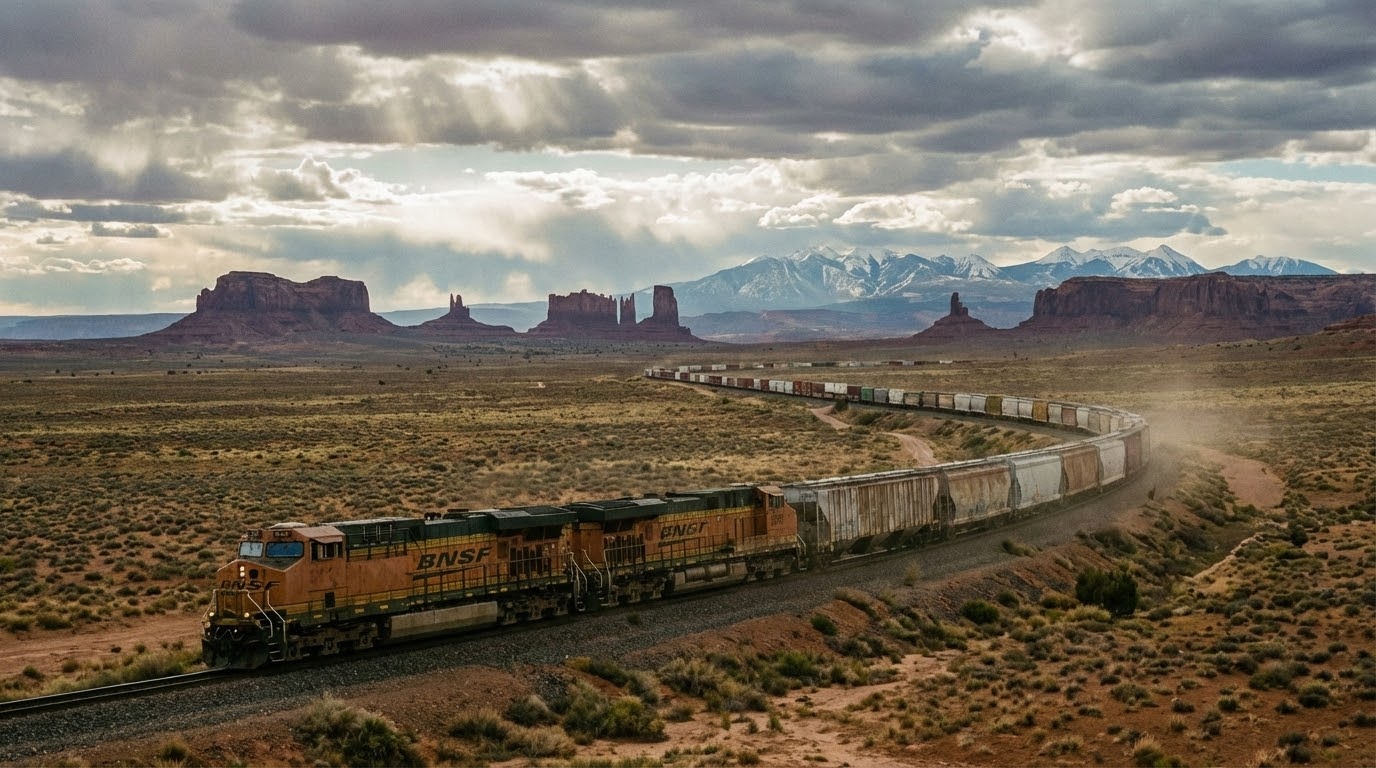
Best Railfan Destinations
North America offers railfans an embarrassment of riches. From dramatic mountain passes to busy urban junctions, from preserved steam operations to modern intermodal terminals, opportunities to watch and photograph trains span the continent. This guide covers destinations worth traveling for—places where the railroad action justifies the journey.
The West: Mountains and Megaton Trains
Western railroading offers dramatic scenery, heavy tonnage, and challenging geography that concentrates traffic through spectacular locations.
Tehachapi Loop, California
No railfan destination is more iconic. The Tehachapi Loop carries BNSF and Union Pacific traffic over the Tehachapi Mountains between Bakersfield and Mojave. The engineering marvel—a 3,779-foot loop that spirals trains over themselves to gain elevation—attracts railfans worldwide.
Long trains create the famous “going over itself” photograph as the head end passes above the trailing cars still completing the loop. Traffic is heavy: expect 30-40 trains daily. The town of Tehachapi offers services; the loop itself is accessed via Woodford-Tehachapi Road with multiple viewing spots.
Cajon Pass, California
BNSF’s Cajon Subdivision drops from Summit to San Bernardino through dramatic mountain scenery. The pass carries transcontinental traffic between the ports of Los Angeles/Long Beach and the rest of the BNSF network. Traffic density is extreme—sometimes a train every few minutes.
Multiple locations offer access. The Hill 582 area provides the classic shot of trains emerging from the mountains. Sullivan’s Curve features dramatic S-curves with mountain backdrops. Mormon Rocks showcases distinctive red rock formations. Victorville and San Bernardino bookend the pass with yard activity.
Donner Pass, California
Union Pacific’s crossing of the Sierra Nevada via Donner Pass offers stunning mountain scenery along the original transcontinental route. Tunnels, snowsheds, and dramatic granite cliffs define the territory. Traffic includes Amtrak’s California Zephyr plus UP freight.
Winter access can be challenging—the railroad operates through blizzards that close highways. Summer and fall provide the best combination of weather and photogenic conditions. Truckee, Emigrant Gap, and Colfax provide access points along the route.
Soldier Summit, Utah
Union Pacific’s former Denver & Rio Grande Western crosses the Wasatch Mountains via Soldier Summit, a scenic climb through Helper, Utah. Helper earned its name from the helper locomotives added to trains here for the climb to Soldier Summit.
The Helper area concentrates railfan interest. The town itself offers the Western Mining and Railroad Museum. East of Helper, the climb to Soldier Summit provides numerous locations with mountain scenery and heavy coal traffic.
The Mountain Corridors
Rocky Mountain railroading tests equipment and rewards observers with spectacular scenery.
Moffat Tunnel Route, Colorado
Union Pacific’s Moffat Tunnel Subdivision crosses the Continental Divide via the 6.2-mile Moffat Tunnel and climbs through dramatic Colorado mountain scenery. The route carries Amtrak’s California Zephyr plus UP freight.
The climb from Denver to the tunnel passes through Coal Creek Canyon and Winter Park. East Portal and West Portal provide viewing of trains entering and exiting the tunnel. The Big 10 curves near Fraser offer photogenic mountain railroad scenes.
Bozeman Pass, Montana
BNSF’s former Northern Pacific crosses the Continental Divide at Bozeman Pass in Montana. The route carries heavy intermodal and grain traffic through sweeping Montana landscapes.
Bozeman Pass offers more subtle scenery than some western passes—rolling hills rather than dramatic peaks—but train density is high and the Montana light can be exceptional. The towns of Livingston and Bozeman anchor the territory.
Marias Pass, Montana
BNSF’s Hi-Line crosses the Continental Divide at Marias Pass, the lowest crossing in the United States at 5,214 feet. The route skirts Glacier National Park, providing opportunities to combine railfanning with national park visits.
Essex, Montana, hosts the historic Izaak Walton Inn, a restored railroad hotel popular with railfans. Trains pass regularly, and the inn offers both viewing and accommodation. Winter brings spectacular snow operations.
Classic Junction Cities
Some cities concentrate railroad activity from multiple carriers, providing variety within compact areas.
North Platte, Nebraska
Union Pacific’s Bailey Yard in North Platte is the world’s largest classification yard—stretching eight miles and handling 10,000 cars daily. The Golden Spike Tower provides an elevated viewing platform overlooking the entire operation.
Beyond the yard itself, North Platte sits on UP’s busy transcontinental mainline. Traffic is constant. The tower offers climate-controlled observation with educational displays explaining yard operations.
Rochelle, Illinois
The Rochelle Railroad Park sits at the diamond where BNSF and Union Pacific cross at grade. Combined traffic approaches 100 trains daily. The park includes an elevated platform, restrooms, and scanner frequencies.
Rochelle demonstrates midwestern mainline railroading—flat terrain, high-speed running, and sheer volume. Day or night, trains cross the diamond frequently. The location is easily accessible from Chicago.
Fostoria, Ohio
The Fostoria Iron Triangle sees Norfolk Southern and CSX crossing in a triangular configuration. Multiple diamonds create constant activity as trains from various directions converge. The town maintains a railfan-friendly viewing area.
LaPlata, Missouri
The BNSF and Amtrak crossing at LaPlata provides a viewing opportunity in small-town Missouri. The Depot Inn Motel features viewing platforms and serves railfan visitors specifically. Amtrak’s Southwest Chief stops here twice daily.
Eastern Opportunities
Eastern railroading offers different character—more varied terrain, older infrastructure, and different traffic patterns than the transcontinental west.
Horseshoe Curve, Pennsylvania
Norfolk Southern’s Pittsburgh Line crosses the Alleghenies via the famous Horseshoe Curve near Altoona, Pennsylvania. This engineering landmark—a sweeping curve carved into the mountainside in 1854—has drawn observers for over 170 years.
A visitor center provides parking, educational displays, and viewing platforms. Alternatively, ride the funicular railway to track level. Traffic includes NS freight plus Amtrak’s Pennsylvanian. Nearby Altoona offers the Railroaders Memorial Museum.
Harpers Ferry, West Virginia
The junction of CSX and Norfolk Southern at Harpers Ferry provides scenic railfanning where the Shenandoah and Potomac Rivers meet. Amtrak’s Capitol Limited and MARC commuter trains add passenger variety to freight operations.
The historic town—a national historical park—offers accommodations, restaurants, and cultural attractions beyond the railroad. The setting is among the most photogenic on the East Coast.
Cumberland, Maryland
Cumberland sits on CSX’s former B&O mainline through the Appalachian Mountains. The Western Maryland Scenic Railroad operates tourist trains from here, providing steam and heritage diesel operations.
CSX coal and intermodal traffic passes through continuously. The Narrows—a dramatic water gap where the railroad threads between mountains—offers classic Appalachian railroad scenery.
Steam and Heritage Operations
For those seeking steam-era experience, heritage railroads provide living history.
Cumbres & Toltec Scenic Railroad, Colorado/New Mexico
The Cumbres & Toltec preserves 64 miles of former Denver & Rio Grande Western narrow-gauge trackage over Cumbres Pass. Steam locomotives haul passengers through some of the most spectacular mountain scenery in North America.
Service runs from Chama, New Mexico, or Antonito, Colorado. The experience approaches eight hours for the full journey. Operating season runs May through October. This isn’t a short excursion—it’s an authentic narrow-gauge mountain railroad journey.
Strasburg Rail Road, Pennsylvania
America’s oldest continuously operating railroad offers steam-powered rides through Lancaster County. The adjacent Railroad Museum of Pennsylvania houses one of the finest collections of historic railroad equipment in North America.
Strasburg provides an accessible introduction to steam railroading. Multiple daily departures, dining train options, and the museum make this suitable for families and serious historians alike.
Union Pacific Steam Program
Union Pacific maintains operational steam locomotives including Big Boy 4014 and Northern 844. These locomotives make periodic public excursions and display appearances across the UP system.
Seeing a Big Boy in operation—the largest successful steam locomotive ever built—offers an experience impossible to replicate with static displays. Check Union Pacific’s Steam website for schedules. Events draw enormous crowds; plan accordingly.
For detailed Big Boy history, see our Union Pacific Big Boy article.
Canadian Destinations
Canada offers distinctive railfanning opportunities with different carriers and spectacular scenery.
Morant’s Curve, Alberta
Canadian Pacific’s legendary photo location in Banff National Park captures trains against Rocky Mountain backdrops. The curve provides the classic CPR publicity shot—blue locomotives sweeping through green forests beneath snowy peaks.
Access is easy via the Bow Valley Parkway between Banff and Lake Louise. Traffic includes CP freight plus VIA Rail’s Canadian. Morning light favors eastbound trains; evening light suits westbound. Summer crowds can be significant.
Kamloops to Vancouver, British Columbia
The Fraser and Thompson River canyons between Kamloops and Vancouver provide dramatic Canadian railfanning. Both CP and CN operate through these canyons, often with trains visible from each carrier simultaneously.
Cisco Crossing features parallel bridges where the two railroads cross the Fraser River. The Trans-Canada Highway provides access to numerous viewpoints along the Thompson River. Hell’s Gate offers views of trains threading the narrow Fraser Canyon.
Jasper, Alberta
CN’s transcontinental mainline passes through Jasper National Park, providing mountain railfanning in stunning scenery. VIA Rail’s Canadian stops here, as does the Rocky Mountaineer tourist train.
Jasper offers the advantage of accessible lodging and services within a railfan-worthy setting. The CN mainline runs directly through town. Early morning and evening trains catch the best mountain light.
Planning Your Railfan Trip
Successful railfan trips require planning beyond just showing up.
Traffic Patterns
Research typical traffic levels before committing to a destination. Some locations see thirty trains daily; others might see three. Online forums and railfan publications provide traffic estimates. Real-time tracking apps help on-location.
Weather and Season
Consider weather and lighting angles. Summer provides long days but harsh midday light. Spring and fall offer better light angles and manageable weather. Winter can be spectacular or impossible depending on location.
Accommodation
Some railfan destinations have limited lodging. Book early for popular events or remote locations. Some railfan-friendly hotels position themselves near track for window-side viewing.
Combine Interests
Build trips around multiple attractions. Combine active railfanning with museums, heritage operations, or scenic areas your travel companions might appreciate. Fostering family tolerance for railfan stops enables future trips.
For photography-specific preparation, our Train Photography Tips guide covers equipment and techniques for capturing what you see.
Understanding Railroad History at Destinations
Context enriches the railfanning experience. Understanding why trains run where they do—the historical decisions, engineering challenges, and economic forces—adds depth to observation.
Many railfan destinations connect to broader railroad history. Tehachapi represents Southern Pacific’s determination to reach San Francisco from Los Angeles. Horseshoe Curve demonstrates Pennsylvania Railroad’s engineering ambition. Helper recalls the Denver & Rio Grande Western’s mountain conquest.
Our article on the Golden Age of American Railroads provides historical context for understanding what you observe at classic railroad locations.
Frequently Asked Questions
Where should a first-time railfan visit? +
For first-time railfans, start with accessible locations featuring high traffic. Rochelle, Illinois, offers easy access from Chicago with nearly constant train action. The Horseshoe Curve visitor center provides facilities and context. Strasburg Rail Road combines active steam with the adjacent museum. These locations reward brief visits while building interest for longer trips to remote destinations.How do I find out when trains will pass a location? +
Railroad radio scanners let you hear dispatcher communications indicating train movements. Smartphone apps track train locations in real-time using data from various sources. Online forums and Facebook groups share information about specific lines. For Class I railroads, traffic is often frequent enough that waiting time is manageable. Heritage railroads publish schedules on their websites.Are railfan destinations safe? +
Public viewing locations like Rochelle Railroad Park, Golden Spike Tower, and official visitor centers are safe and designed for railfan access. Roadside viewing from public right-of-way is generally safe if you stay clear of traffic and railroad property. Never trespass on railroad property. Trains are quieter and faster than you expect. Always maintain situational awareness and respect private property. Some locations are more isolated—exercise normal travel precautions.What equipment should I bring? +
Essentials include camera (whatever you have), binoculars for distant viewing, weather-appropriate clothing, sun protection, and water. A radio scanner or smartphone with tracking apps helps predict train arrivals. Bring more memory cards and batteries than you think necessary. For remote locations, carry emergency supplies appropriate to the terrain and season. Folding chairs or camp stools make waiting more comfortable.How can I find more locations near me? +
Online railfan communities share location information extensively. Websites like Railfan Guides and trainorders.com document viewing spots. Google Maps satellite view reveals railroad infrastructure. Local railroad historical societies know their territory intimately. Simply exploring roads that parallel or cross railroads reveals opportunities—many excellent spots have no formal designation but see regular railfan visitors.
The Journey Continues
North American railroading sprawls across a continent. The destinations highlighted here represent starting points rather than comprehensive coverage. Every region offers opportunities—rural branch lines, urban terminals, industrial switching, heritage operations. Railfans spend lifetimes exploring and still discover new locations.
The best railfan destination is wherever trains run and you can safely observe. Start local, learn what interests you most, and gradually expand your range. The community is welcoming; fellow railfans share information readily. A hobby that combines travel, photography, history, and the simple joy of watching trains rewards its practitioners generously.
Your next great railfan moment might be waiting at a crossing five miles from home or at a mountain pass two thousand miles away. Either way, the trains keep running, and the opportunities keep coming. All you have to do is show up and watch.
Affiliate Disclosure: Off The Rails participates in affiliate programs. Links to products may earn us a commission at no extra cost to you. We only recommend products we genuinely believe benefit the hobby.