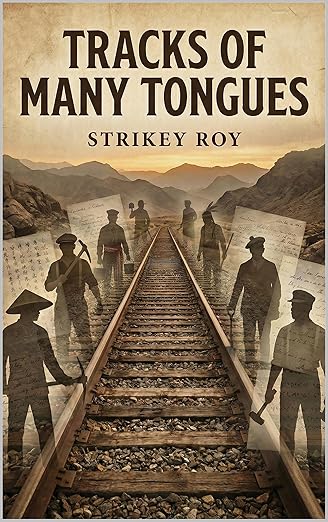
Tracks of Many Tongues
$24.54
Description
Who built the railway you learned about in school, and whose voices were left out? If you are tired of triumphalist histories celebrating steel and engineers while erasing the lives, labor, and languages of those who actually laid the tracks, this book fills that gap.
Tracks of Many Tongues tells the human story behind the Canadian Pacific Railway. It centers the multicultural workforce—Chinese laborers blasting tunnels, Irish navvies grading embankments, First Nations and Métis guides navigating terrain, Scottish workers bringing masonry expertise, and Black labourers maintaining engines. Instead of treating the CPR as engineering triumph alone, this book reconstructs daily life: crowded bunkhouses, multilingual cookhouses, pay and debt systems, food practices, and survival strategies.
Using letters in Cantonese, Gaelic, and English, oral histories, payroll ledgers, and archaeological traces, it reveals migration, coercion, resilience, and cultural exchange. You’ll read a Chinese cook hiding wages in bamboo, an Irish navvy’s complaint about unpaid overtime, a Métis woman trading pemmican for rice.
Who this book is for:
- Historians and students seeking labor-centered perspectives
- Descendants seeking fuller family histories
- Museum professionals and educators wanting inclusive history tools
- Anyone curious about migration, labor exploitation, and how everyday people shaped national projects
What you gain:
- Shift from engineering feat to human network of obligation and survival
- Vivid camp life accounts: shelter, sanitation, food economies
- Insight into racialized labor divisions, piecework pay, company stores
- Appreciation for multilingual worlds: pidgins, interpreters, letters, songs sustaining networks
- Examples of resistance: strikes, walkouts, savings clubs, petitions
How it transforms understanding: From passive knowledge to active empathy. You’ll see names, languages, choices shaping the railway. Understand contracts, constables, mechanisms controlling movement. Read letters as strategic documents revealing humor, grief, negotiation. Educators get actionable ways to center marginalized voices.
Key tools:
- Methodology using letters, oral testimony, paybooks, material culture
- Case studies: recruitment, contracts, migration networks
- Wage systems, deductions, debt cycles, worker resistance
- Camp layouts, ethnic quarters, sanitation, hierarchies
- Language contact, code-switching, multilingual practices
- Resistance chapters: strikes, desertion, savings clubs
- Public history guidance for museums and classrooms
Why now: Stories ignoring labor and displacement shape harmful policy and memory. Centering builders and naming exploitation creates honest history. Recognize legacies of migration, racialized labor, coercion. Celebrate exchange, resilience, creativity.





Reviews
There are no reviews yet.